01302 203 888
Free Delivery on all orders
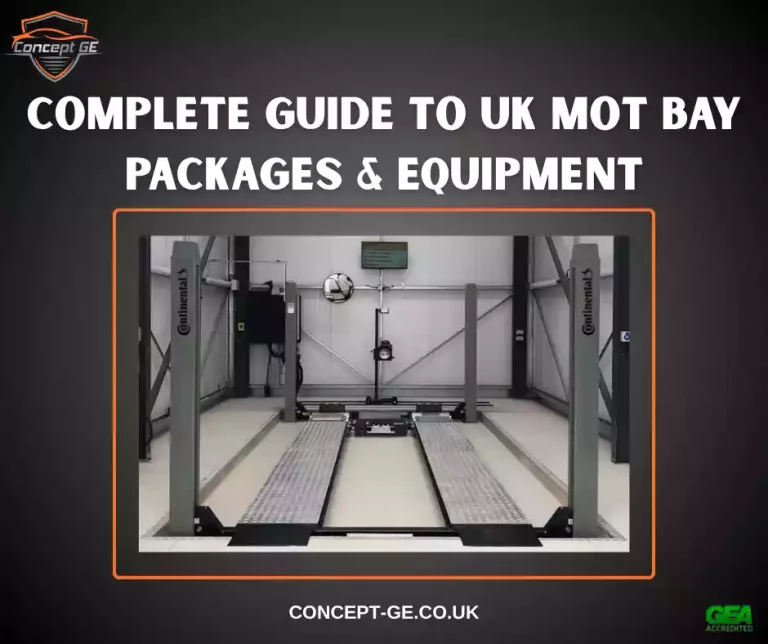
Investing in a dedicated MOT bay can transform a garage. The benefits extend well beyond the test fee itself. It opens a substantial revenue stream from repair work identified during inspections, improves workshop efficiency by bringing testing in-house, and improves customer loyalty and trust by offering a comprehensive, one-stop shop for repairs, service work and MOTs.
At its core, the MOT test ensures that vehicles on UK roads meet minimum safety and environmental standards, as stipulated by the DVSA. For a garage to conduct these tests, a properly configured and approved MOT bay is essential.
The decision to install an MOT bay brings numerous advantages. Direct revenue comes from the MOT test fees themselves – for instance, the current maximum DVSA fee for a Class 4 car MOT is £54.85. However, the more significant financial benefit often lies in the indirect revenue generated. MOT tests frequently highlight necessary repair work, which a well-equipped garage can then undertake, alongside capturing more regular servicing work from these customers. Operationally, having an in-house MOT bay means greater control over scheduling, a reduction in vehicle movement to third-party testing stations, and elimination of outsourcing costs. Moreover, achieving DVSA approval as an MOT testing station significantly enhances a garage’s reputation and credibility, marking it as a provider of comprehensive, trustworthy services. This, in turn, provides a distinct competitive edge over establishments that do not offer MOT testing.
Depending on which type of vehicles you specialise in, your location and garage size may determine what class of MOT you can carry out, for example, Class 7 lifts and brake testers require greater capacity than those for Class 4:
Some garages may also consider Class I & II for motorcycles, depending on their customer base and service offerings. Therefore, this decision should align with the garage’s existing business model, available resources, and target market.
Table 1: Overview of the most common MOT classes for UK Garages
| MOT Class | Typical Vehicle Types | Key Considerations for Your Garage |
| Class I & II | Motorcycles (Class I up to 200cc, Class II all motorcycles, with or without sidecars). | Smaller dedicated space, specialised motorcycle lifts and brake testing adaptors. Caters to a niche but potentially profitable market. |
| Class IV | Cars, light vans (up to 3,000kg DGW), taxis, minibuses (up to 12 seats), motor caravans. | Standard bay dimensions, lift capacity typically 3.5-4 tonnes. Caters to the largest segment of private and light commercial vehicles. |
| Class VII | Goods vehicles (over 3,000kg up to 3,500kg DGW). | Larger bay dimensions may be needed, higher lift capacity (e.g., 5 tonnes+), heavier duty brake testing equipment. Targets commercial van clients. |
Embarking on the journey to become an MOT testing station involves navigating a series of DVSA requirements. The application process itself is detailed, requiring the completion of the VT01 form to apply to set up or change an MOT test station. Key personnel roles include the Authorised Examiner (AE) – the business entity – and the Authorised Examiner Designated Manager (AEDM), who oversees testing operations and requires specific training.
The physical premises are equally crucial. An MOT Bay must comply with stringent DVSA regulations concerning its dimensions and layout, tailored to the classes of vehicles to be tested. This includes minimum specifications for the overall width, length, and height of the bay, specific dimensions for vehicle entrances and critical headroom clearances, particularly above vehicle lifts
Many Automated Test Lane (ATL) configurations utilise 4-post lifts. However, they necessitate adequate workshop headroom and are subject to ongoing Lifting Operations and Lifting Equipment Regulations (LOLER) inspections and maintenance.
Inspection Pits, on the other hand, can be advantageous in workshops with height restrictions, as they don’t require the same overhead clearance as lifts. They can facilitate quicker throughput for certain types of vehicles, especially heavier commercial ones, and do not have the ongoing lift-specific maintenance or LOLER requirements that lifts do (though the pit itself requires good design for safety, lighting, and drainage). DVSA Authorised Testing Facilities (ATFs) often use pits. The downsides include potentially higher initial construction costs and disruption, their fixed location, and the need for careful design to ensure safety, adequate lighting, and effective drainage.
The decision between a lift and a pit is not based on a single factor like cost. It involves a careful assessment of the specific workshop premises (especially headroom), budget, the types of vehicles to be serviced, desired operational workflow, long-term maintenance considerations, and safety protocols.
Once the foundational decisions about location, layout, and inspection method (lift or pit) are made, attention turns to the specific testing equipment. A non-negotiable principle is that all MOT testing equipment must be DVSA-approved. The Garage Equipment Association (GEA) often publishes lists of such approved equipment, and using non-compliant items will prevent a station from gaining or retaining its MOT authorisation.
A significant development in recent years is the introduction of Connected MOT Equipment. This refers to testing apparatus that can transmit test results directly to the DVSA’s MOT Testing Service (MTS).
Below are the key pieces of equipment required for an MOT bay:
Sourcing each piece of MOT bay equipment individually, navigating DVSA applications, and coordinating installation can be a highly complex, time-consuming, and potentially stressful undertaking for any garage owner. This is where opting for a complete MOT bay package from a specialist supplier, such as Concept Garage Equipment, presents a significantly more streamlined and supported approach.
Partnering with an experienced supplier offers a multitude of advantages that can de-risk the entire investment and ensure a smoother and faster path to an operational, compliant MOT facility. These benefits typically include:
Essentially, an MOT bay package transforms a potentially fragmented and challenging series of tasks into an integrated solution, managed by experts. This significantly reduces the burden on the garage owner, allowing them to focus on their core business while the complexities of MOT bay setup are professionally handled.
A well-planned, DVSA-compliant, and properly equipped MOT bay is undeniably a significant asset for any UK garage. It is an investment that promises not only increased revenue and enhanced customer loyalty but also a stronger, more competitive position within the automotive service market. By understanding the requirements, carefully selecting equipment, and considering the benefits of a comprehensive package approach, garage owners can confidently move towards establishing or upgrading a facility that will serve their business well into the future.
Take the first step towards upgrading your workshop’s capabilities and profitability with a state-of-the-art MOT Bay. The team at Concept Garage Equipment is ready to help.
Contact Concept Garage Equipment today on 01302 203 888 or Contact Us for expert advice, tailored MOT bay packages, and a no-obligation quote!