01302 203 888
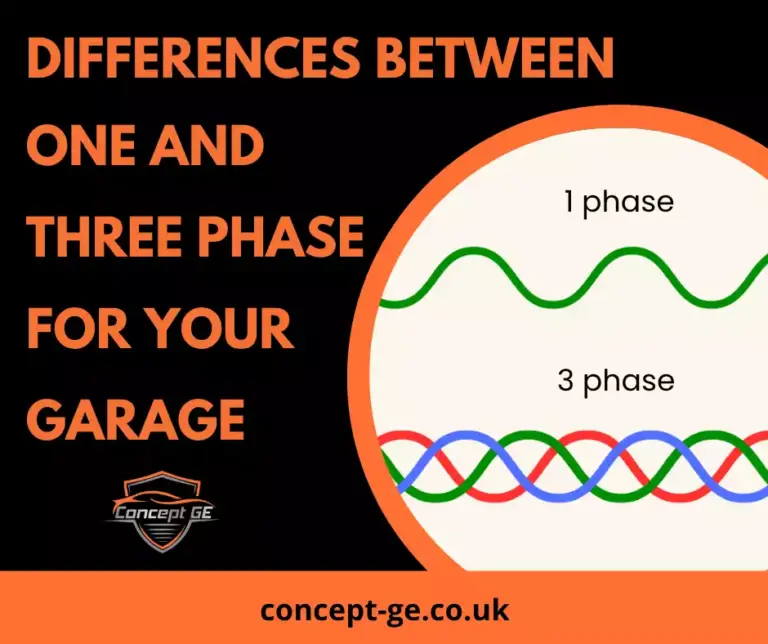
Choosing the right power supply is an important part of setting up or upgrading a garage workshop. Whether you are buying a new vehicle lift, tyre changer, wheel balancer or other garage equipment, understanding the difference between 1 phase and 3 phase power can help you avoid installation problems and unnecessary costs.
So, what is the difference between single phase and three phase power, and which is best for your garage?
1 phase, also known as single phase, is the type of electrical supply commonly found in homes and smaller commercial premises. In the UK, it typically provides a 230V supply and is suitable for many lower-powered applications.
For smaller garages, single phase can be more than sufficient. A wide range of modern garage equipment is specifically designed to operate on 1 phase power, meaning you do not necessarily need a 3 phase supply to run a professional workshop.
For example, at Concept Garage Equipment, we supply a range of 1 phase tyre changers and wheel balancers, as well as vehicle lifts available in either 1 or 3 phase versions.
This makes single phase a practical option where electrical capacity is limited or where installing a new three phase supply would be expensive.
3 phase, or three phase power runs at 400V AC power (often referred to as 415V), and uses three alternating electrical supplies rather than one. In commercial and industrial environments, it is commonly used to provide a higher and more consistent supply of electrical power.
For a busy garage workshop operating several high-powered machines, 3 phase can offer significant advantages. Equipment with larger motors and higher power requirements may be designed specifically for three phase operation.
Three phase is particularly useful where equipment is being used frequently or where multiple high-demand machines need to operate as part of a busy workshop. Concept Garage Equipment’s range includes 3 phase vehicle lifts, MOT equipment and other professional garage machinery.
There is no universal winner when comparing single phase vs three phase. The right choice depends on your building, the equipment you intend to use and the demands of your business.
The important thing is to check the electrical specification of every machine before you buy. A machine requiring three phase power cannot simply be connected to a standard single phase socket.
The phase requirement can vary considerably between different types of garage equipment.
Vehicle lifts are a good example. Some models are available in both single and three phase versions, while others have a specific electrical requirement.
For instance, Concept Garage Equipment offers 4-tonne two-post lifts in 1 or 3 phase configurations, giving garages greater flexibility when choosing equipment.
Many tyre changers can run from a single phase supply, making them well suited to smaller garages and independent tyre businesses. However, some professional or specialist machines are available with either 1 phase or 3 phase motors.
The key is to choose the specification that matches your existing electrical supply and expected workload.
Wheel balancers generally have relatively modest electrical requirements, and there are many 1 phase options available. At Concept Garage Equipment, for example, we supply several wheel balancers designed for single phase operation.
This means that having only a single phase supply does not prevent you from establishing a capable wheel and tyre workshop.
If your premises only has a single phase supply but you want to install equipment that requires three phase power, a single phase to three phase converter may be an option.
Concept Garage Equipment has installed MOT bays in buildings with only a single phase supply by using a phase converter to provide a three phase output. This can provide an alternative to arranging a new three phase supply, depending on the equipment and electrical installation involved.
However, a converter is not automatically the right solution for every machine. The power requirements, motor rating and total electrical load should all be assessed before installation. A qualified electrician and your garage equipment supplier should be consulted to ensure the proposed setup is suitable.
Not necessarily.
A modern garage workshop can operate successfully using single phase power, particularly if it uses equipment specifically designed for a 1 phase supply. In fact, Concept Garage Equipment supplies numerous tyre changers, wheel balancers and vehicle lifts that can operate on single phase.
However, if you are planning a high-volume workshop with multiple vehicle lifts, compressors, MOT equipment and other high-powered machinery, three phase power may provide greater flexibility for your installation.
The best approach is to plan your equipment requirements before committing to an electrical upgrade.
In most UK garages and outbuildings, you’ll come across two main types of electrical supply:
You might sometimes hear three‑phase referred to as “415V”, that’s an older nominal figure, but the actual UK standard today is 400V. For all practical purposes, though, it’s the same thing.
Before ordering new garage equipment, check:
Getting these answers early can prevent costly changes later.
At Concept Garage Equipment, we supply and advise on a wide range of garage equipment, including vehicle lifts, tyre changers, wheel balancers and MOT equipment. Our team can help you identify equipment that matches your premises, workload and available electrical supply.
Please note: Always get a qualified electrician to advise, install or inspect your electrical supply within your premises, as this is not something a garage owner or home user without suitable qualifications should attempt.
Whether you have 1 phase or 3 phase power, don’t assume you need to upgrade your electrical installation before speaking to an equipment specialist.
Give our friendly team a call today for help and advice on 01302 203 888 or contact us via our contact form.