01302 203 888
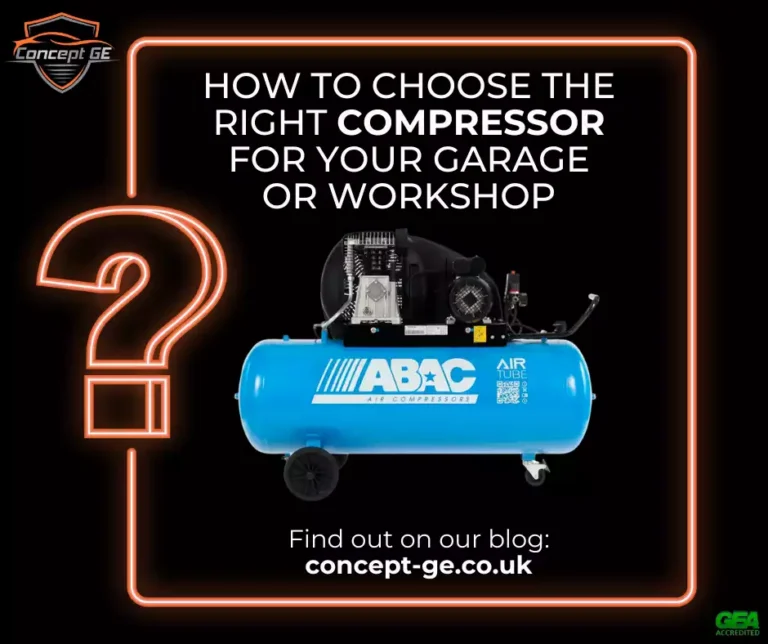
Selecting the right air compressor is a crucial investment that influences productivity, efficiency and longevity in your workshop or garage. Follow these steps to order the right size air compressor for your tyre machine.
It’s important to understand that a bigger tank doesn’t automatically mean more airflow. What matters is the combination of the pump’s CFM output (how much air it delivers), its capacity and its ability to reach the necessary PSI or bar pressure. Whether it’s for tyre machines or powering multiple garage tools, these specifications should align with how you plan to use it.
Figuring out the right pressure is straightforward. Look at the highest pressure required for your tasks. A compressor that offers a little extra above your maximum PSI ensures consistent performance.
Typically, 10 bar (around 150 PSI) is sufficient for most automotive environments. For more heavy-duty needs, like truck or agricultural tyres running at 8-9 bar (120-130 PSI), you’ll want a compressor rated around 13 bar to keep things efficient and reliable.
Every air-powered tool has a CFM rating. To determine what you need, add up the CFM demands of everything that might run simultaneously. For example, a tyre changer at 4 CFM, an air tool at 4 CFM, and tyre inflation at 2 CFM total 10 CFM. In that case, a compressor delivering around 12 CFM FAD is a good rule of thumb. If you’re a single operator and won’t be running those tools at once, even 6-8 CFM might suffice.
While vessel size (tank capacity) doesn’t directly affect airflow, it plays a role in how long your compressor can run before recharging. Unless you’re drawing a massive burst of air in a short time, like 4000 litres in 2 minutes every hour, a giant tank is rarely necessary in everyday work.
Choosing a compressor isn’t just about technical specifications, it’s also about how it fits into your workshop. You’ll need to consider the machine’s weight, dimensions, noise levels and where it will be positioned in your workshop. These details can influence which model is most suitable for your setup.
If you’re operating a mobile tyre-fitting service, the considerations remain the same. Your compressor still needs the appropriate CFM, PSI, tank size and smart layout planning to work effectively in a van or mobile environment. This guide is equally relevant to stationary and mobile operations.
The acronyms and terms used for air compression machines can be somewhat confusing, and not always helpful when making a choice of compressor for your workshop, so we’ve summarised the main terms below to help:
If you’re still uncertain, our expert team at Concept Garage Equipment is ready to help. We can help you choose the perfect garage equipment for your garage or workshop.
Call us today on 01302 203 888 or use the online contact form, and we will be happy to help you.