01302 203 888
Free Delivery on all orders
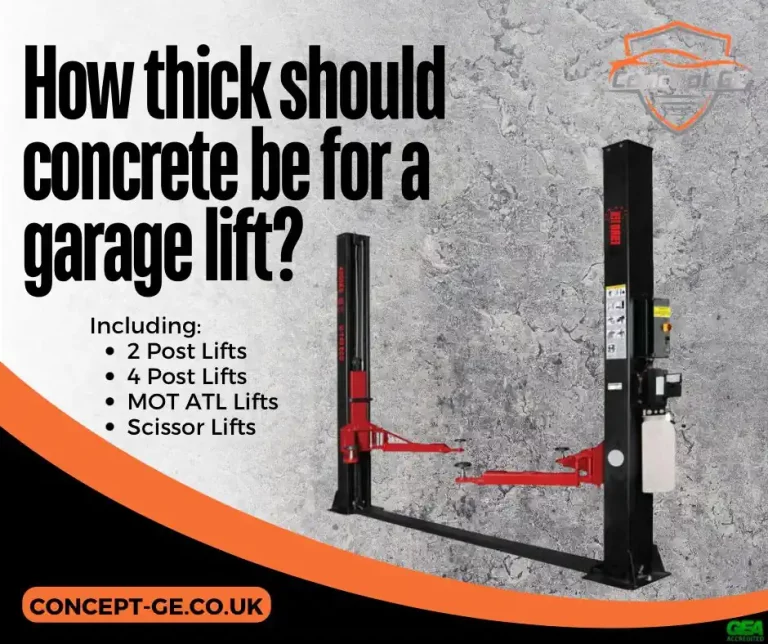
The minimum expert-recommended concrete depth for standard garage lift installation is 150mm (6 inches) for 2-post, 4-post, and MOT ATL lifts. For a recessed car scissor lift, the minimum recommended depth increases to 200mm (8 inches). It is critical that the concrete is sound, level, and fully cured before installation. Always consult the specific lift manufacturer’s manual for definitive specifications.
Before diving into the detailed requirements, here are the crucial points regarding concrete preparation for your garage lift:
One of the most common questions we receive is “How thick does concrete need to be for a car lift?” This is a great question to ask prior to the purchase or installation of a garage lift.
When setting up a garage lift, one of the most critical considerations for safe and secure installation and usage is the thickness of the concrete that will support the lift. Whether you’re installing a 4-post lift, MOT ATL lift, 2-post lift, or a car scissor lift, ensuring the correct concrete thickness is essential for both safety and functionality.
The minimum recommended concrete thickness for a 4-post lift is around *150mm (6 inches) deep.
Some lift manufacturers and several lift installation engineers use the absolute minimum recommended depth of 100mm or 4 inches of concrete, but due to the excessive weight and forces imparted by a 4-post lift at the floor bolts and base, we would always be overtly cautious and recommend a deeper concrete depth than this for added safety.
Four-post lifts are known for their strength and stability and are a popular choice for garages and MOT Bays.
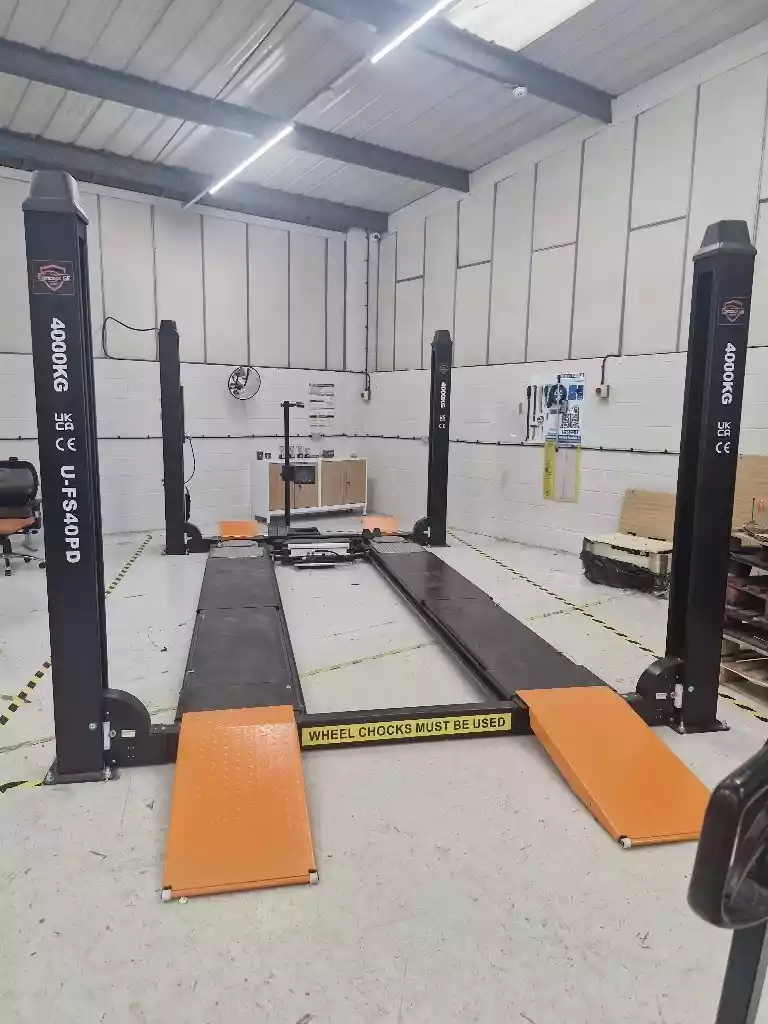
For this type of 4 post lift, the minimum recommended concrete thickness for an MOT ATL lift is around *150mm (6 inches) deep.
MOT ATL lifts, also known as MOT lifts or MOT ramps, are the perfect above ground inspection platform for MOT testing, as well as tyre changes, brake inspections and other underbody work.
The weight being held by an MOT ATL lift can vary greatly between a Class 4 MOT Bay for car MOTs and a Class 7 MOT Bay handling vans and light commercial vehicles, but we would always advice caution and use the deeper concrete thickness to support this type of vehicle lift.
It’s always best to consult the manufacturer’s specifications for your chosen lift model to ensure proper load distribution and secure installation before use.
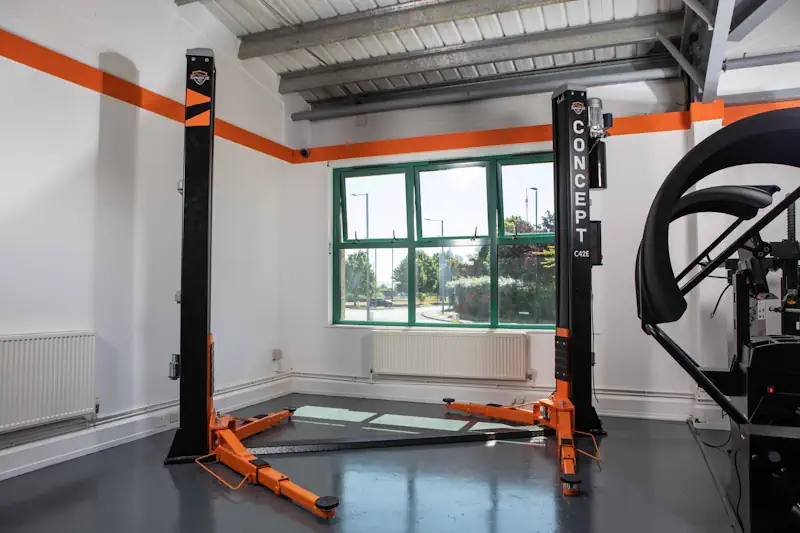
For a 2 post lift the minimal concrete depth is around *150mm (6 inches) deep.
Some garage lift installers recommend the absolute minimum recommended depth of 100mm or 4 inches of concrete, but due to the excessive weight and forces imparted by a 2 post lift at the floor bolts and base, we would always recommend deeper concrete than this for maximum safety and to prevent post or vehicle damage.
Two-post lifts are great for saving space in your garage. They’re perfect for lifting vehicles for repairs or storing them. You can also easily reach the wheels and tyres without needing to lift the car any higher. This is because the lift uses special points on the underside of the car, instead of relying on the wheels for support.
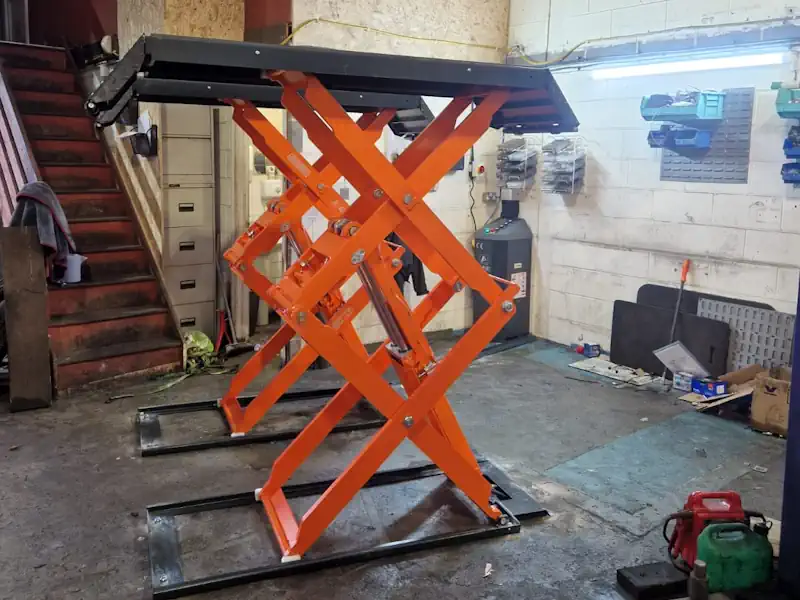
For a recessed garage scissor lift the minimal concrete depth is around *200mm (8 inches) deep.
Recessed car scissor lifts provide a versatile lifting solution, offering a low profile and excellent stability. Despite the different lifting mechanism the concrete thickness requirement for a scissor lift follows the same principle as the other lifts mentioned, as the floor must be solid, stable and thick enough to take the weight of the lift and the vehicle without any risk of the concrete cracking or failing.
A level concrete floor is crucial for the safe and proper installation of all garage lifts. The concrete must be sound, free from cracks or damage, and of the appropriate thickness, as discussed previously. An uneven floor can cause instability, causing the lift to become misaligned, compromising its stability, potentially leading to safety hazards, and causing uneven wear on the lift components.
How to ensure sound and level concrete for lifts:
If you’re unsure about the levelness of your garage concrete floor, we recommend speaking to us or consulting a professional contractor for assessment and levelling if necessary before lift installation.
Here are some additional factors to consider when determining the necessary concrete thickness for your garage lift:
* Minimum depths stated in this article and throughout this website are an indication of the minimum concrete depth that would be needed for the smallest size and tonnage of lift in each case, and you should always consult your lift manual or with a garage lift installation export for the minimum concrete depth for the lift type, size, and weight that you plan to purchase and have installed.
If you have any questions about the concrete requirements for your garage lift or need assistance with your lift supply or installation, give Concept Garage Equipment a call.
At Concept Garage Equipment, we offer free advice over the phone and can provide free quotations for any garage lift enquiry. Our team of experts is here to help you make the best choice for your garage setup.
Call us today on 01302 203 888 or use the website contact form today, we are here to help.